
| The Cleaning Specialists
Ceilings are easy to overlook in a daily cleaning routine. Dust can collect on exposed beams, panel edges and other overhead surfaces while the floors below receive regular attention. Ceiling cleaning deserves its own plan because the surface material and the way it is accessed both matter.
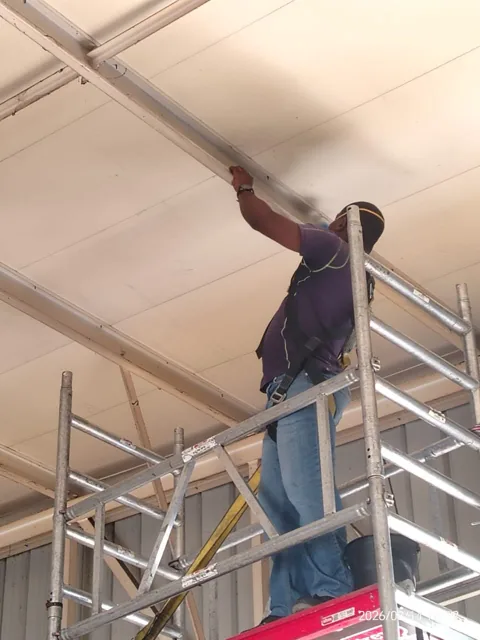
The supplied photograph shows overhead work from a scaffold. It illustrates why commercial ceiling cleaning is different from wiping an accessible surface at desk height. The right access arrangement must be decided for the premises, not copied from a photograph.
Identify the ceiling material before cleaning
Painted ceilings, suspended tiles, acoustic panels and exposed structural surfaces do not all tolerate the same treatment. Check the product or manufacturer’s instructions. Some finishes permit careful wiping, while others need dry dust removal or a specialist method.
Too much moisture can mark or damage an unsuitable surface. Abrasive tools may also affect the finish. Before booking, explain what the ceiling is made of and whether there are loose panels, peeling paint or existing stains.
Separate surface dirt from building defects
A dusty beam is not the same problem as a recurring damp patch. Water marks, sagging panels or repeated mould growth may point to a leak, condensation or another building issue. Cleaning alone does not resolve that cause.
Report suspicious damage to the person responsible for building maintenance. If the material is unknown or potentially hazardous, do not scrape, brush or disturb it while trying to improve its appearance. Arrange an appropriate assessment first.
Plan high level cleaning around the site
Height, floor space, furniture and pedestrian movement all influence access. A suitable work plan should consider the actual premises, including any restrictions around machinery, electrical fittings and occupied areas. Staff should not improvise by standing on desks, chairs or unstable supports.
- Identify which rooms, ceiling areas and overhead surfaces need attention.
- Record approximate height and anything that limits access.
- Explain when the premises are occupied and which areas must remain operational.
- Flag fragile surfaces, damaged fittings and site specific restrictions.
- Agree how the work area and items below it will be protected.
Work at height should be planned and carried out by competent people using suitable equipment. The access method should follow the assessment, rather than being chosen only on price.
Prepare the area below the ceiling
Before work starts, agree who will move or protect desks, stock, equipment and other belongings. Loose dust should not simply be transferred onto recently cleaned work surfaces. Plan the sequence so that any necessary cleaning below the ceiling happens after the overhead work.
For offices, shops and other occupied buildings, scheduling around quieter periods can make coordination easier. Confirm the arrangements with the cleaning team and your site contact.
How often does a ceiling need cleaning?
There is no single schedule for every building. Inspect overhead surfaces as part of routine maintenance and respond to visible dust or soiling. Activities in the space, ventilation, ceiling material and access requirements should inform the frequency. A one off clean may suit a specific project, while other premises need a planned programme.
Book a ceiling cleaning assessment
Explore our ceiling and high level cleaning service for Nelspruit and Highveld premises. When you request an assessment, include photographs, your suburb, approximate ceiling height and the type of building.
For suspended panels, follow the relevant product guidance. Armstrong’s ceiling tile cleaning guidance explains why the method must match the material.
 Cleaning Specialists